(A feature Article by Abdul Hayi Moomen)
In recent days, a number of videos and commentaries circulating on social media, particularly on TikTok, have sparked public discussion about the Third Trimester Field Practical Programme (TTFPP) of the University for Development Studies. Some first-year students deployed to various rural communities have expressed discomfort and frustration about the conditions in certain deprived areas, with a few portraying the situation as though the University had abandoned them to suffer.
While it is understandable that some students may experience culture shock, discomfort, or anxiety upon encountering unfamiliar environments for the first time, it is equally important for the public, students, parents, and other stakeholders to appreciate the philosophy, purpose, and long-standing developmental vision behind the TTFPP.
The truth is simple: the Third Trimester Field Practical Programme is not an accident, nor is it a punishment. It is one of the foundational pillars upon which the University itself was established.
From the very first day a student applies for admission into the University for Development Studies and accepts that admission, that student has also willingly signed up to the rules, regulations, philosophy, and developmental mandate of the University. Central to that mandate is one key word: development. And development, by its very nature, does not occur where everything is already perfect.
One cannot meaningfully speak about development while avoiding communities where poverty, underdevelopment, vulnerability, and social challenges exist. One cannot train true development-oriented graduates by exposing them only to air-conditioned offices, shopping malls, luxury estates, skyscrapers, six-lane highways, and comfortable urban lifestyles. Real development education requires students to go where the problems are. It requires them to see realities firsthand. It requires them to interact with ordinary people, understand their struggles, appreciate their resilience, and think critically about practical solutions.
That is precisely the spirit behind the Third Trimester Field Practical Programme.
The TTFPP intentionally deploys students to rural and deprived communities so they can gain practical exposure to the realities of life in underserved areas. The programme is designed to help students understand issues relating to poverty, sanitation, healthcare delivery, agriculture, education, access to potable water, nutrition, social inequality, local governance, climate vulnerability, and rural livelihoods.
The objective is not to make students suffer.
The objective is to produce graduates who can one day become policymakers, researchers, teachers, doctors, engineers, agricultural experts, planners, administrators, entrepreneurs, and national leaders who genuinely understand the developmental challenges confronting ordinary communities.
Over the years, the impact of the TTFPP has been remarkable.
Many students, after witnessing the conditions in some communities, have become deeply motivated to contribute meaningfully toward solving local problems. Across several years, students have mobilized resources among themselves, sought support from philanthropists and development partners, and undertaken life-changing community interventions.
Some student groups have renovated dilapidated classroom blocks and teachers’ bungalows. Others have donated school uniforms, books, sandals, and stationery to children from poor homes. Some have supported the construction and rehabilitation of boreholes in communities without potable drinking water. Others have educated communities on sanitation and disease prevention, supported immunization campaigns, organized health screening exercises, promoted girl-child education, assisted farmers with improved farming techniques, introduced communities to modern agricultural practices, conducted literacy programmes, organized environmental clean-up campaigns, and helped communities identify pathways toward self-development.
These interventions are not merely academic exercises. They represent the practical application of development education.
Indeed, many alumni of the University continue to testify that the TTFPP shaped their worldview, transformed their understanding of poverty, strengthened their leadership abilities, deepened their compassion, and influenced their professional careers in profound ways.
It is therefore important that students who find themselves in these communities do not see their deployment as a punishment. Rather, they should see it as a rare opportunity to learn directly from society itself.
There are many people in Ghana and across the world who discuss poverty only from textbooks, conference rooms, or social media debates. UDS students are privileged to experience realities firsthand. That experience is invaluable.
Equally important to note is the fact that the University does not simply send students into communities without preparation.
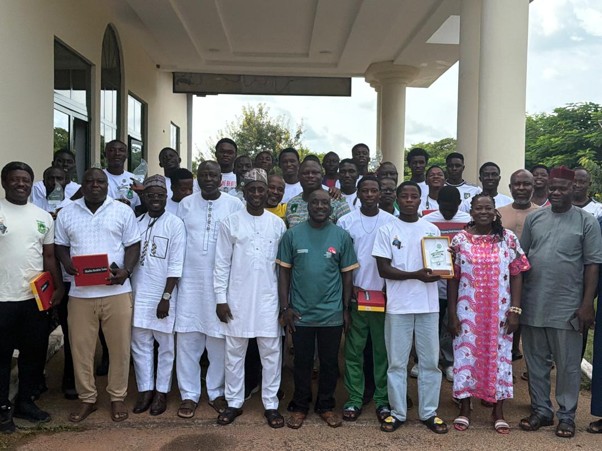
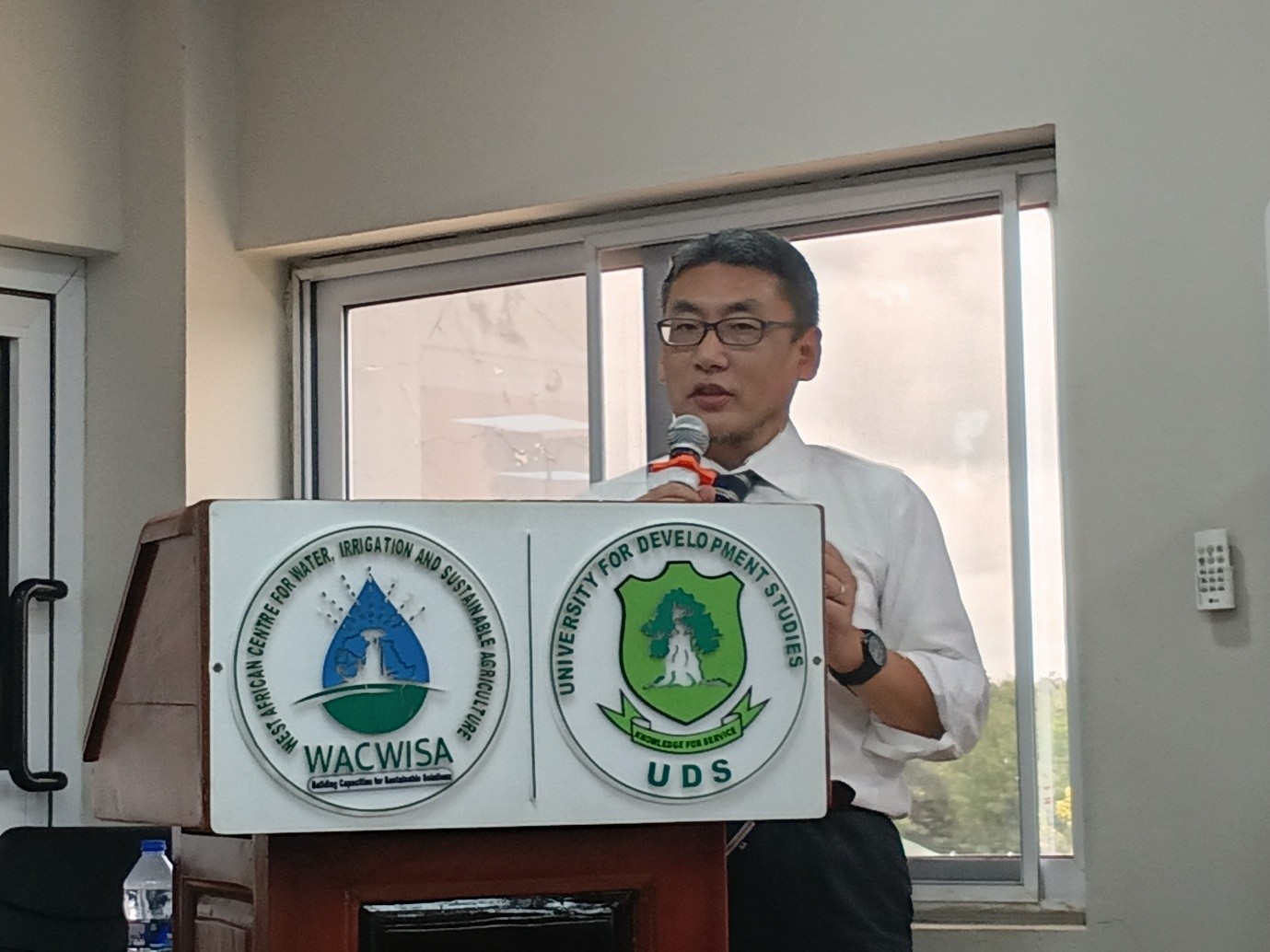
Every year, before deployment, orientation programmes are organized for all eligible students. During these sessions, students are addressed extensively by key University officials including the Vice-Chancellor, the Pro Vice-Chancellor, the Director of the Directorate of Community Relations and Outreach Programmes (DCROP), officials from the University Health Services Directorate, the Dean of Students, the University Counsellor, security officials, and other relevant stakeholders.
Students are educated on a wide range of important issues including how to adapt to new environments, how to maintain personal health and hygiene, how to relate respectfully with host communities, emergency response procedures, safety precautions, cultural sensitivities, local customs and taboos, conflict management, mental preparedness, communication protocols, and who to contact in case of emergencies. Important emergency contact numbers and communication channels are also shared with students, while coordinators remain accessible through WhatsApp platforms and other communication systems for continuous support.
Unfortunately, however, experience has shown that some students either fail to attend these orientation programmes altogether or do not fully pay attention during the sessions. In some cases, students spend substantial portions of the orientation period on their phones, taking pictures, recording videos, or engaging in unrelated activities instead of carefully listening to the guidance being provided.
Yet, much of what students later complain about in the communities are often issues already discussed during orientation.
This is why students are strongly encouraged to take these preparatory sessions seriously and to maintain constant communication with their coordinators whenever difficulties arise.
No system is perfect, and certainly, there may be genuine challenges in some communities that require attention and improvement. Constructive feedback from students is therefore always welcome and necessary for the continuous improvement of the programme. However, it is important that such concerns are raised responsibly, fairly, and within the broader understanding of the purpose of the TTFPP.
The programme was never designed as a luxury excursion. It was designed as a development-oriented educational experience.
And contrary to the impression created by a few viral TikTok videos, there are thousands of past and present students who describe the TTFPP as one of the most memorable, transformative, enjoyable, and eye-opening experiences of their lives.
Many alumni still speak fondly about the friendships they built in rural communities, the lessons they learned from traditional leaders and local families, the joy of community service, and the life experiences that no classroom lecture could ever provide.
The University for Development Studies was established with a unique mandate: to be a practical, community-centred, and development-focused institution. The TTFPP remains one of the clearest expressions of that vision. Students should therefore embrace the experience not with resentment, but with understanding, humility, empathy, curiosity, and a sense of responsibility.
For in the end, true development professionals are not produced only in lecture theatres. They are shaped in the realities of society itself.
View your student profile, register your courses, etc.
Access learning material on the University's e-Learning platform
Access the University library's resources
Search for and view staff profile